

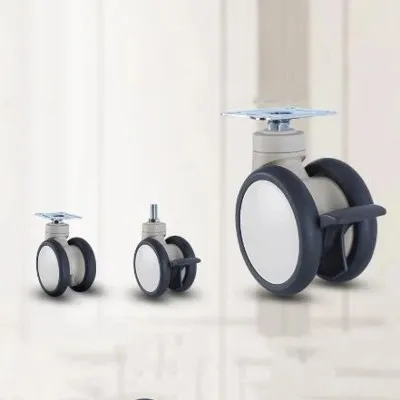


Of all the factors that can cause this problem, these three are the most common:Caster Swivel SectionA Sloppy Swivel Section – If the swivel section is too loose, it can cause the caster to flutter uncontrollably. A loose swivel section, no matter the diameter of the raceway, will create resonance leading to flutter. Misalignment of the Caster to the Ground – If the caster is mounted incorrectly or the caster legs are bent, a resulting misalignment will cause the caster to flutter. Moving at High Speeds – At high speeds, a caster will flutter once it hits a certain velocity and is excited at its natural frequency. In most applications involving industrial casters and wheels, the wheel is not balanced and lends itself to fluttering. |
Important steps to minimize caster flutter.
There are steps you can take to minimize the occurrence of caster flutter. From increasing swivel lead and wheel composition to moving at slower speeds, these options are the best ways to control the situation.
Increasing swivel lead– A longer swivel lead reduces the forces that push the caster sideways. It also increases the caster's natural frequency. This helps keep the caster from fluttering at low speeds.
Incorporating a Precision Bearing Swivel Section – Though a more costly option, casters with precision-machined ball raceways dampen oscillation and flutter less than raceways manufactured through a stamping process.
Reducing the Mass of the Wheel– Just as increasing swivel lead increases the natural frequency of the caster, reducing the mass of the wheel also increases the caster's natural frequency. As a result, the caster will not flutter until it reaches a higher speed.
Reducing Velocity– The faster the caster is moving, the higher the chance for flutter. At low speeds, 2 or 3 MPH, a swivel caster may behave quite well. However, at 8-10 MPH, that same caster may flutter uncontrollably.
Increasing Friction with Ground– Increasing the friction between the wheel and the ground has a small effect on reducing flutter. Installing wheels that provide more friction dampens the oscillation and reduces the chance of building resonance.