

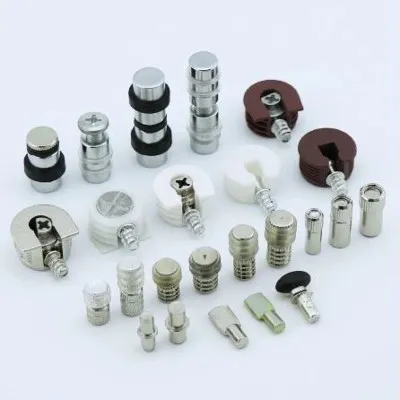

How do locking nuts lock?
Locking nuts are widely used in daily life and have the function of locking and fixing. After tightening, locking nuts will not loosen unless they break. The following will introduce how locking nuts are locked and how to assemble locking nuts correctly.
Locking nut locking principle:
Locking nuts are generally locked by friction, mainly to prevent loosening and vibration. Locking nuts are classified by function into types with nylon rings, with closing ends, and with metal anti-loosening devices. They all belong to effective torque anti-loosening nuts. The principle is to press the embossed teeth into the preset holes of the sheet metal. Generally, the aperture of the preset holes is slightly smaller than that of the rivet nut. The nut is connected to the locking mechanism. When the nut is tightened, the locking mechanism locks the ruler body, and the ruler frame cannot move freely, achieving the purpose of locking; when the nut is loosened, the locking mechanism disengages the ruler body, and the ruler frame moves along the ruler body.

There are several types of lock nuts:
High-strength lock nuts: a type of self-locking nuts, with high strength and stability.
Nylon lock nuts: Nylon self-locking nuts are a new type of high-vibration fastening parts.
Floating lock nuts: two-ear sealed swing self-locking nuts are composed of four parts: sealing cover, self-locking nut, pressure ring, and sealing ring.
Spring clip lock nuts: spring clip lock nuts, which are composed of S-type spring clips and lock nuts.
To install lock nuts (taking nylon lock nuts as an example), you need to equip the following items:
Nylon lock nuts, flat washers, 2 sets of wrenches
First install the washers on the threaded ends of the correct size stainless steel screws or studs. Use your hands to replace the nuts or screws on the screws until friction resistance is encountered to push the nylon in. Tighten the lock nuts firmly, we use a wrench, replace the original nut, and turn clockwise. If the bolt head can be tightened, also use a second wrench to tighten it, while tightening the nut.
The above is a brief introduction to the locking principle and installation steps of the lock nut. I hope it will be helpful to everyone. If you have any questions, please contact us directly