

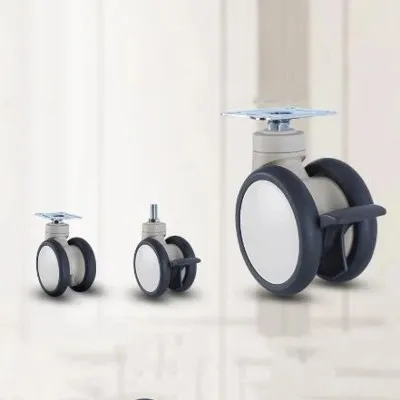


Furniture casters play an important role in daily life, making it easier to move furniture. However, for families with wooden floors, furniture casters may cause some damage to the floors. This article will explore the potential damage to wooden floors by furniture casters and provide some preventive measures.
Potential damage to wooden floors by furniture casters
1. Scratching the floor
Poor-quality casters can easily scratch wooden floors, especially those with less than smooth surfaces. When the furniture moves, the friction between the casters and the floor may cause scratches on the floor surface, affecting the aesthetics of the floor.
2. Indentation and dents
Furniture casters may leave indentations or dents on wooden floors when they are under heavy pressure for a long time. This is especially common on relatively soft floors such as wooden floors. For example, when a single nylon caster is loaded with more than 100-150kg, it may start to risk leaving marks.
3. Moisture penetration
Although the furniture casters themselves will not directly cause moisture penetration, if the casters are damaged or aged, it may cause moisture to penetrate into the floor through the gap between the casters and the floor, causing deformation or damage to the floor.
4. Noise problem
Poor-quality casters are prone to make harsh noises, which not only affects the comfort of the home environment, but may also cause indirect damage to the floor. For example, long-term noise may cause the fixing screws of the floor to loosen, thereby affecting the stability of the floor.
Preventive measures
1. Choose high-quality casters
Choosing high-quality casters is the first measure to prevent floor damage. High-quality casters usually have a smooth surface and are not easy to scratch the floor. At the same time, they have strong load-bearing capacity and are not easy to leave indentations. In addition, high-quality casters also have good wear resistance and silent effects.
2. Use floor protectors
Placing floor protectors under furniture casters can effectively reduce the direct contact of the casters with the floor, thereby reducing the risk of scratches and indentations. Floor protectors are usually made of soft materials that can disperse the pressure of the casters on the floor.
3. Regular inspection and maintenance
Check the condition of furniture casters regularly to make sure they are not damaged or aged. If casters are found to be damaged or worn, they should be replaced in time. In addition, cleaning the floor regularly to prevent dust and debris from accumulating between the casters and the floor can also reduce the risk of scratches.
4. Control indoor humidity
Maintaining appropriate indoor humidity is an important measure to prevent wooden floors from deforming. Too high or too low humidity may cause wooden floors to expand or contract, thus affecting the stability of the floor. Using a humidifier or dehumidifier can help control indoor humidity and keep the floor in the best condition.
Conclusion
The potential damage of furniture casters to wooden floors cannot be ignored, but these damages can be effectively reduced by choosing high-quality casters, using floor protection pads, regular inspection and maintenance, and controlling indoor humidity. I hope the information provided in this article can help you better protect your wooden floors and enjoy a more comfortable and beautiful home environment.