

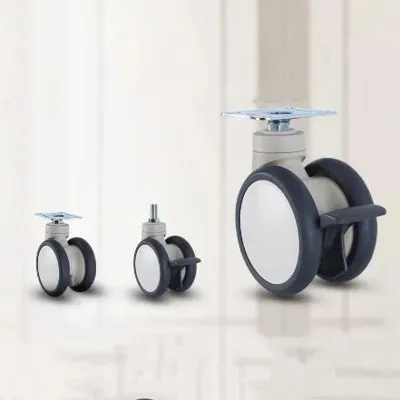

Casters are classified according to their material properties. Conventional materials include PⅤC, nylon, PU, TPR, rubber and other materials; according to the use environment, they are generally divided into high temperature resistance, normal temperature and low temperature resistance.
1. The unit price of PVC casters is relatively cheap, hard, inflexible, loud when used, and has low environmental protection requirements. If you have high cost requirements and low environmental protection requirements, you may wish to use PVC casters. :
2. The cost of nylon casters is not comparable to that of PVC casters. But in terms of wear resistance, nylon casters are more wear-resistant than PVC casters. If you have high requirements on the wear resistance and cost control of casters, you can choose casters made of nylon.
3. PU casters are more environmentally friendly and have no peculiar smell, but the cost is relatively high. If you have high environmental protection requirements for casters and are not very sensitive to cost, you can consider using PU casters.
4. TPR casters are the most expensive casters in conventional casters, and their main advantages are environmental protection and quietness. The wheel surface is soft and elastic, so the effect of mute and elastic is very superior, which is incomparable with other materials mentioned above. If you pay attention to environmental protection and light cost, but also require good mute effect, you can choose casters made of TPR material.