

In the process of producing standard parts, standard parts manufacturers often enhance the anti-corrosion and rust-proof capabilities of standard parts through surface treatment.
The first, electro-galvanized
Electrogalvanizing is the most common surface treatment method and process technology in the production of standard parts by standard parts manufacturers. Electro-galvanized coating is a typical anodic coating, which is mainly used to improve the corrosion resistance of substrates. Due to its thin coating thickness, it is mainly used for surface corrosion protection under general environmental conditions. After chromate passivation treatment, its anti-corrosion performance is greatly improved, and the excellent electro-galvanized layer can be used for neutral outdoor protection, but the anti-corrosion performance is relatively poor in harsh industrial atmosphere and coastal climate. The electro-galvanized surface treatment method and process technology have the advantages of low cost, stable and reliable process and convenient use. However, hydrogen embrittlement is easy to occur, so hydrogen removal treatment should be carried out in time after electro-galvanizing. In addition, the acid and alkali resistance is poor, the anticorrosion time is short, and the process environmental protection is low.
The second type, powder sherardization
Powder galvanizing is a surface treatment process that uses a zinc immersion agent as a source of zinc, and generates zinc by heating, and iron atoms diffuse into each other to form a zinc-dipping layer (zinc-iron alloy layer) on the surface of steel. Its main component is pure zinc powder, which is added with appropriate filler materials such as alumina, refractory clay and ammonium chloride. Its most prominent feature is not an external coating, but the base metal and the infiltrating layer form an organic whole, so the combination is very firm. The hardness and corrosion resistance of the powder zinc coating are much better than those of the electrogalvanized coating.
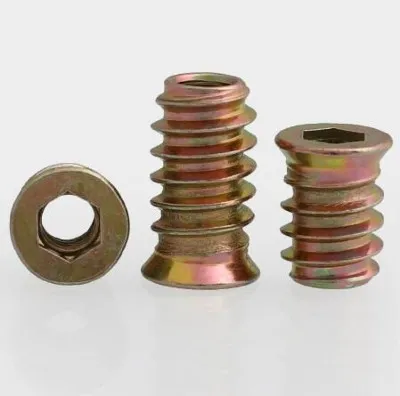
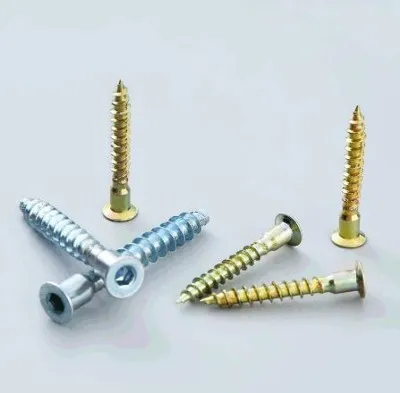
The powder galvanizing process is especially suitable for the surface anti-corrosion treatment process of nuts, bolts and other fasteners, as well as small hardware products, workpieces with complex shapes and powder metallurgy products.
The third type, mechanical galvanizing
Mechanical galvanizing is the use of impact media (such as glass balls) in the presence of zinc powder, dispersants, accelerators, liquid media (usually water) and other substances to impact the surface of steel parts, and form on the surface of the parts. The galvanized layer has a surface treatment process. The mechanical galvanized layer is a kind of anti-corrosion coating formed by a completely different process from electro-galvanizing and hot-dip galvanizing. Process features: During the production operation at room temperature, through the rotation of the plating cylinder loaded with the parts, the impact medium in the cylinder collides with the parts to generate mechanical impact force with the rotation of the cylinder, and the zinc powder collides and deposits on the surface of the parts, thereby forming A coating with the basic physical characteristics of metallic zinc. Process characteristics: The galvanizing process of the mechanical galvanizing process does not cause hydrogen embrittlement hazards to high-strength steel. Process defects: There is inhomogeneity in the thickness of the zinc layer; the zinc layer is not as smooth and bright as the electroplated layer. Hot dip galvanized screws
Fourth, hot dip galvanizing
Hot-dip galvanizing, also commonly known as hot-dip galvanizing, is a process in which pre-treated steel parts are put into molten zinc to form zinc and/or zinc-iron alloy coatings on their surfaces to obtain a metal coating. process and method. It has a wide range of applications, such as hot-dip galvanized highway traffic barriers (highway corrugated beam steel guardrail fastener connection pair), hot-dip galvanized fasteners and other fasteners that are widely used in pipelines and power transmission, etc. . The service life of hot-dip galvanizing is not only related to the process itself, but also has a direct relationship with the adhesion of the galvanized layer. The hot-dip galvanized layer has good coverage and protection ability, and the ability to resist atmospheric corrosion is better than that of electro-galvanized.