


Introduction
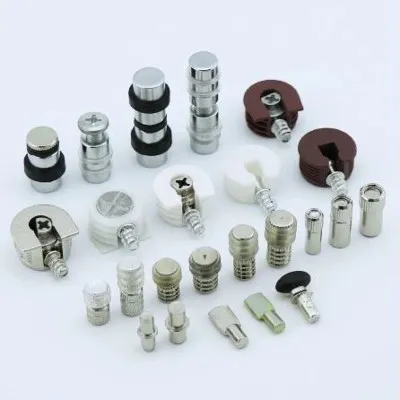
Insert nuts are small but important fasteners used in wood furniture manufacturing. They create a strong internal thread inside wood, MDF, plywood, particle board, or laminated panels, allowing screws or bolts to be installed, removed, and reinstalled many times without damaging the furniture structure.
For furniture factories, choosing the right insert nut is not only about size. It also affects assembly strength, production efficiency, product durability, packaging, transportation, and customer experience. A poorly selected insert nut may loosen during use, damage the wood panel, or make furniture difficult to assemble.
This guide explains how to choose insert nuts for wood furniture manufacturing, with practical examples for tables, chairs, cabinets, wardrobes, bed frames, and flat-pack furniture.
What Are Insert Nuts for Wood Furniture?
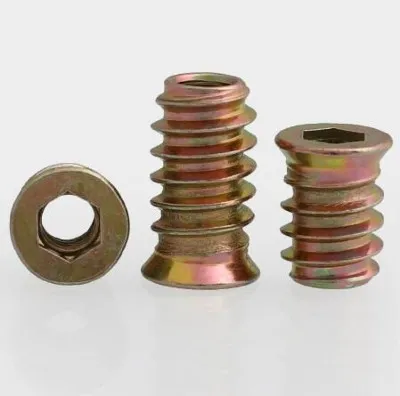
Insert nuts, also called threaded inserts for wood, are metal fasteners installed into pre-drilled holes. After installation, they provide a durable female thread inside the wood. Bolts, machine screws, or connector screws can then be tightened into the insert nut.
They are widely used in:
Wooden tables and table legs
Dining chairs and office chairs
Cabinets and wardrobes
Bed frames and headboards
Flat-pack furniture
Sofa legs and furniture feet
Shelving systems
Commercial and hotel furniture
Compared with direct wood screws, insert nuts provide stronger repeat assembly performance. This is especially useful for furniture that needs to be shipped flat, assembled by users, or moved many times.
Why Insert Nuts Matter in Furniture Manufacturing
In furniture production, many products are assembled, disassembled, packed, shipped, and assembled again by the final customer. If the fixing point is weak, the product may become unstable after several uses.
For example, a wooden dining table with detachable legs often needs a strong threaded connection between the tabletop and the legs. If ordinary wood screws are used repeatedly, the wood hole may become loose. But with properly installed M6 or M8 insert nuts, the table legs can be removed and reinstalled without damaging the tabletop.
This makes insert nuts especially valuable for export furniture, online furniture brands, flat-pack furniture suppliers, and OEM furniture factories.
Common Types of Insert Nuts for Wood
Different furniture applications require different insert nut styles. The most common types include:
1. Screw-In Insert Nuts
Screw-in insert nuts have external threads that bite into wood. They are installed by screwing them into a pre-drilled hole.
Best for: solid wood, hardwood, plywood, table legs, chairs, and bed frames.
Example:
A furniture manufacturer producing solid oak dining tables may use M8 screw-in insert nuts in the underside of the tabletop. The table legs can then be attached with M8 bolts. This provides a strong, removable connection and makes the table easier to ship in a flat package.
2. Knock-In or Hammer-In Insert Nuts
These insert nuts are installed by pressing or hammering them into a hole. Some designs have barbs or teeth to prevent rotation.
Best for: particle board, MDF, cabinet panels, and low-to-medium load furniture.
Example:
A cabinet factory may use M6 knock-in insert nuts in wardrobe side panels. These allow adjustable feet, support brackets, or connector bolts to be attached during final assembly.
3. Flanged Insert Nuts
Flanged insert nuts have a wider top edge that helps distribute pressure and prevents the nut from sinking too deeply into the wood.
Best for: furniture feet, sofa legs, chairs, and panels where surface support is important.
Example:
A sofa manufacturer may use flanged M8 insert nuts under the sofa base. The sofa legs can be screwed in securely, while the flange helps prevent the insert from pulling into the wooden frame.
4. Zinc Alloy or Die-Cast Insert Nuts
Zinc alloy insert nuts are commonly used in ready-to-assemble furniture because they are cost-effective and suitable for many panel furniture applications.
Best for: flat-pack cabinets, wardrobes, shelves, office furniture, and mass production.
Example:
A flat-pack bookshelf manufacturer may use zinc alloy M6 insert nuts together with connector bolts. This allows the customer to assemble the bookshelf at home with basic tools.
5. Brass Insert Nuts
Brass insert nuts offer good corrosion resistance and a clean appearance. They are often used in higher-end wood products or decorative applications.
Best for: premium wood furniture, display fixtures, decorative panels, and products requiring better corrosion resistance.
Example:
A premium wooden display stand may use brass M5 insert nuts because the product needs a cleaner appearance and stable performance over repeated assembly.
How to Choose the Right Insert Nut Size
The right size depends on the furniture structure, load requirement, wood material, and screw or bolt size.
Common thread sizes include:
M4: Small furniture parts, decorative components, light-duty fittings
M5: Cabinet hardware, small shelves, office furniture components
M6: Wardrobes, cabinets, chairs, medium-duty furniture
M8: Tables, bed frames, sofa legs, heavy-duty furniture connections
M10 or above: Heavy-duty wooden structures or special furniture applications
Example 1: Wooden Table Legs
For a dining table with removable wooden legs, M8 insert nuts are usually a better choice than M6 because the table must support weight and resist shaking during daily use.
A typical setup could be:
Material: carbon steel or zinc alloy
Thread size: M8
Surface finish: zinc plated or nickel plated
Application: tabletop underside and detachable table legs
Matching fastener: M8 machine bolt
Example 2: Cabinet and Wardrobe Panels
For wardrobes, cabinets, and shelves made from MDF or particle board, M6 insert nuts are often enough.
A typical setup could be:
Material: zinc alloy or carbon steel
Thread size: M6
Application: side panels, adjustable feet, internal brackets
Benefit: suitable for mass production and flat-pack assembly
Example 3: Chair Frames
For wooden dining chairs or office chairs, M6 or M8 insert nuts may be used depending on the load point.
A chair seat connected to metal legs may require M6 insert nuts, while a thicker wooden chair frame may require M8 insert nuts for stronger support.
Example 4: Bed Frames
Bed frames require strong connections because they carry repeated movement and weight. M8 insert nuts are commonly used for side rails, headboards, and footboards.
A bed frame manufacturer may use M8 insert nuts with connector bolts to allow the product to be packed flat and assembled easily by the customer.
Choose Insert Nuts Based on Wood Material
Different wood materials require different fixing methods.
Solid Wood
Solid wood has better holding strength, making it suitable for screw-in insert nuts. Hardwoods such as oak, beech, and rubberwood often work well with threaded inserts.
Recommended: screw-in insert nuts, flanged insert nuts, carbon steel or brass inserts.
MDF
MDF is softer than solid wood and can crack or expand if the hole is too small. Proper hole diameter is very important.
Recommended: knock-in insert nuts, flanged insert nuts, zinc alloy inserts.
Particle Board
Particle board has lower holding strength, so the insert nut should have a good external grip or flange.
Recommended: flanged insert nuts, knock-in insert nuts, wider external thread designs.
Plywood
Plywood has layered strength and can work well with screw-in insert nuts when the hole size is correct.
Recommended: screw-in insert nuts, carbon steel insert nuts, zinc plated inserts.
Choose the Right Material and Surface Finish
The material and finish affect strength, cost, corrosion resistance, and appearance.
Carbon Steel Insert Nuts
Carbon steel insert nuts are strong and suitable for most furniture applications. They are commonly used for tables, beds, chairs, and commercial furniture.
Common finishes include:
Zinc plated
Nickel plated
Black oxide
White zinc
Yellow zinc
Zinc Alloy Insert Nuts
Zinc alloy insert nuts are widely used in mass-produced panel furniture. They are cost-effective and suitable for cabinets, wardrobes, shelves, and flat-pack furniture.
Brass Insert Nuts
Brass insert nuts are suitable for higher-end furniture, decorative wood products, and applications where corrosion resistance or appearance matters.
Stainless Steel Insert Nuts
Stainless steel insert nuts are used when corrosion resistance is important, such as outdoor wooden furniture, humid environments, or special commercial furniture projects.
Installation Tips for Better Performance
Choosing the right insert nut is only one part of the process. Correct installation is also important.
Here are several practical tips:
Use the correct pre-drilled hole size
If the hole is too small, the wood may crack. If it is too large, the insert nut may loosen.
Keep the hole straight
A tilted hole can cause assembly problems and uneven stress.
Match the bolt length correctly
The bolt should fully engage the insert thread without pushing too deeply into the wood.
Test before mass production
Furniture factories should test samples before confirming bulk orders.
Consider repeated assembly
For furniture sold online or exported overseas, repeated assembly strength is very important.
Real Furniture Manufacturing Examples
Example A: Flat-Pack Bookshelf
A flat-pack bookshelf made from particle board may use M6 zinc alloy insert nuts. The customer receives panels, connector bolts, and simple tools. During assembly, the bolts lock into the insert nuts to create a stable structure.
This solution helps the manufacturer reduce packaging size and shipping cost while improving the end-user assembly experience.
Example B: Hotel Bed Frame
A hotel furniture supplier may choose M8 carbon steel insert nuts for bed frames. Since hotel beds are used frequently and may be moved during room maintenance, the connection must be stronger than ordinary household furniture.
M8 insert nuts with zinc plating can provide strength, durability, and better resistance to long-term use.
Example C: Office Desk with Metal Legs
For office desks with metal legs and wooden tabletops, M6 or M8 insert nuts can be installed under the tabletop. The metal legs are then fixed with machine bolts.
This allows the desk to be shipped in separate parts and assembled quickly at the project site.
Example D: Sofa Legs
A sofa factory may use M8 flanged insert nuts under the wooden sofa frame. Customers or installers can screw the sofa legs into position without damaging the frame.
The flanged design helps distribute pressure and reduces the risk of loosening.
Example E: Custom Display Stand
A retail display stand made from plywood may require brass M5 insert nuts. The stand may need to be assembled and disassembled many times for exhibitions or store changes. Brass inserts offer a clean appearance and reliable threaded performance.
What Information Should Buyers Provide Before Ordering?
To get the right insert nuts for a furniture project, buyers should provide clear technical information.
Important details include:
Thread size, such as M4, M5, M6, M8
Overall length
Outer diameter
Head or flange diameter
Material requirement
Surface finish
Wood material type
Application, such as table legs, cabinet panels, bed frames, or chair seats
Order quantity
Packaging requirement
Drawing or sample, if available
For custom furniture hardware projects, drawings or samples can help the manufacturer confirm the best structure, material, and finish.
Why Choose ZIN Hardware for Furniture Insert Nuts?
ZIN Hardware supplies furniture fasteners and hardware solutions for furniture manufacturers, wholesalers, and project buyers. We support different insert nut sizes, materials, surface finishes, and packaging options for furniture production.
Our insert nuts can be used for wood furniture, panel furniture, cabinets, wardrobes, tables, chairs, bed frames, sofa legs, and flat-pack furniture.
Available customization options include:
Thread size
Outer diameter
Length
Material
Surface treatment
Head or flange design
Logo packaging
Bulk packaging
OEM and ODM production
Whether you need standard insert nuts or custom furniture fasteners based on drawings, ZIN Hardware can help you choose a suitable solution for your project.
FAQ
What size insert nut is best for wood furniture?
M6 and M8 are commonly used in wood furniture manufacturing. M6 is suitable for cabinets, wardrobes, and medium-duty furniture. M8 is better for tables, bed frames, sofa legs, and stronger load-bearing connections.
Can insert nuts be used in MDF?
Yes. Insert nuts can be used in MDF, but the hole size and installation method must be correct. Flanged or knock-in insert nuts are often suitable for MDF and particle board furniture.
Are insert nuts better than wood screws?
For furniture that needs repeated assembly and disassembly, insert nuts are usually better than direct wood screws. They provide a stronger metal thread inside the wood and reduce damage caused by repeated tightening.
What material is best for insert nuts?
Carbon steel is suitable for strength, zinc alloy is cost-effective for mass furniture production, brass is good for premium or decorative applications, and stainless steel is better for corrosion resistance.
Can ZIN Hardware make custom insert nuts?
Yes. ZIN Hardware can support custom insert nuts based on size, material, surface finish, drawings, samples, packaging, and project requirements.
Conclusion
Choosing the right insert nuts for wood furniture manufacturing depends on the furniture type, wood material, load requirement, thread size, surface finish, and assembly method.
For light cabinet parts, M5 or M6 insert nuts may be enough. For tables, bed frames, and sofa legs, M8 insert nuts are often a stronger choice. For flat-pack furniture, zinc alloy or carbon steel insert nuts can improve assembly efficiency and product durability.
If you are looking for standard or custom insert nuts for wood furniture, contact ZIN Hardware with your size, material, finish, drawing, sample, and order quantity. Our team can help you find a suitable furniture hardware solution for your production needs.