

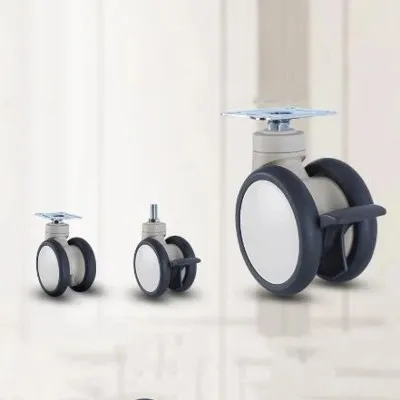

Casters, also known as wheels or rollers, are an important part of many movable objects such as furniture, carts, and industrial equipment. The lifespan of casters can vary significantly depending on several factors.
一,Quality of the Casters
High - quality casters are generally made with better materials and manufacturing processes. For example, casters made with high - grade steel or durable plastics are more likely to last longer than cheaper alternatives. Good quality casters are often more resistant to wear and tear, which means they can withstand more pressure and usage without deteriorating quickly. This is supported by industry standards that suggest higher - end casters can have a significantly longer lifespan compared to lower - end ones in similar usage scenarios 1.
二,Usage Frequency and Load
The more frequently the casters are used, the shorter their lifespan is likely to be. For instance, a caster on a heavy - use office chair that is moved around constantly throughout the day will wear out faster than a caster on a piece of furniture that is only moved occasionally. Additionally, the load that the casters carry also plays a crucial role. Heavy - duty casters are designed to carry larger weights, but even they have their limits. If a caster is constantly overloaded, it will significantly reduce its lifespan. There are many case studies in the field of furniture manufacturing where improper use of casters in terms of load and frequency has led to premature failure 1.
三,Environmental Conditions
The environment in which the casters are used can have a major impact on their longevity. If the casters are exposed to moisture, such as in a humid warehouse or a bathroom where water may splash on them, they are more likely to rust (if made of metal) or degrade (if made of certain plastics). Extreme temperatures can also affect the performance and lifespan of casters. For example, very cold temperatures can make some plastics brittle, while high temperatures can cause the lubricants in the caster bearings to break down more quickly. There have been reports in industrial settings where casters in outdoor or un - climate - controlled environments have a much shorter lifespan compared to those in more controlled indoor environments 1.
四,Maintenance
Regular maintenance can extend the life of casters. This includes cleaning the casters to remove dirt and debris that can get stuck in the wheels or bearings, and lubricating the moving parts. Lack of maintenance can lead to increased friction, which in turn causes more wear and tear. For example, if a caster's bearings are not lubricated regularly, they will start to grind against each other, leading to faster deterioration. There are many DIY guides available that emphasize the importance of proper caster maintenance to ensure a longer lifespan 1.
In conclusion, it is difficult to determine exactly how long casters will last as it depends on multiple factors including quality, usage, environment, and maintenance. However, by understanding these factors and taking appropriate measures, it is possible to maximize the lifespan of casters.