

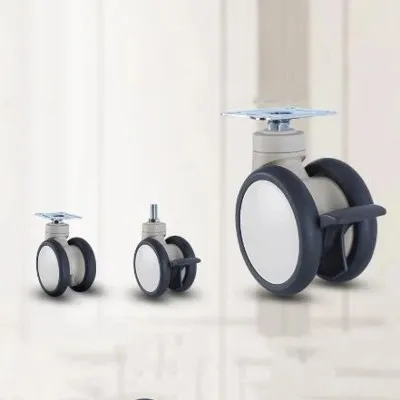

Choosing the right caster size is essential to ensure smooth movement of your equipment or furniture. Here are a few key factors to help you determine the best size of caster you need:
1. Load Weight
- Consider the load weight: First, you need to know the total weight that the caster will carry. Heavier loads usually require larger casters to distribute the pressure, thereby reducing wear and improving stability. For example, if your equipment is very heavy, it is recommended to choose casters with larger diameters.
- Load capacity of a single caster: Calculate the maximum weight that each caster needs to bear. Generally, it is recommended to use four casters to share the weight so that even if one caster has a problem, the others can continue to support the equipment.
2. Floor Type
- Hard Floor: On tile, wood flooring or concrete floors, smaller casters usually perform well. These floors are relatively flat and do not require large casters to overcome unevenness.
- Soft or Uneven Floor: If the floor is soft or uneven, it is recommended to use larger casters. Large casters can better cope with small obstacles and reduce the risk of sinking into soft floors.
3. Frequency of movement
- Frequent movement: If the equipment or furniture needs to be moved frequently, it is recommended to choose a larger caster. Larger casters can roll more easily, reduce friction, and extend service life.
- Occasional movement: If the equipment or furniture is rarely moved, you can choose a smaller caster. Smaller casters are more compact and do not take up much space.
4. Ease of operation
- Ease of maneuverability: Larger casters are easier to maneuver, especially when turning or passing through narrow spaces. Larger casters can provide better steering performance, making movement easier.
- Space constraints: If space is limited, you can choose a smaller caster. This ensures that the equipment or furniture can still move freely in the limited space.
5. Budget
- Cost considerations: Generally, larger casters cost more. If you have a limited budget, you can choose smaller casters, but make sure they can meet basic needs.
In summary, choosing the right caster size requires a comprehensive consideration of factors such as load weight, ground type, frequency of movement, ease of operation, and budget. By carefully evaluating these factors, you can find the caster size that best suits your needs.