

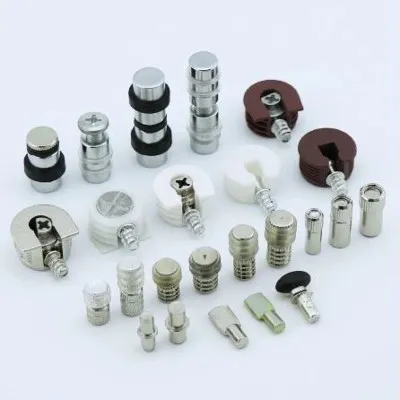

How to choose the surface finish of screws
How to choose screw surface treatment? There are many surface treatment processes for screws, but the most common ones are oxidation, electrophoresis, electroplating, Dacromet, etc. In this article we will summarize the different colors produced by each surface treatment.
The most important factor in determining the proper surface preparation of a screw is the environment in which the screw is used. If the screws are exposed to harsh conditions such as heat or chemicals, a more durable surface treatment such as Dacromet will be required.

Which screw coating is right for you?
To obtain the best combination of properties, you must first determine the application needs and then select a surface treatment that will deliver the required performance levels. There are many factors to consider when making this selection, including appearance, cost, durability and ease of maintenance.
black plated screws
Common black screws are mainly used to fix black or other dark-colored electrical appliances on the bottom or rear case. In order to reduce management, black screws are also used inside most machines. There are several processes such as oxide black, black nickel, black zinc, and electrophoretic black.
The black oxidation process is the most stable and economical, but has poor adhesion; the black nickel process has good adhesion, but is not durable; the black zinc process has better adhesion and durability than the black oxidation process, but is less economical; electrophoretic black It has good process stability and strong corrosion resistance.
It is a new process, but the cost is higher. There are two types of surface treatments for screws: one is to form a protective film on the surface of the screw, which has good corrosion resistance and wear resistance; the other is to change the color of the screw, mainly for aesthetics.
Black oxidized screws
It is divided into normal-temperature blackening and high-temperature blackening. Taking normal temperature blackening as an example, the process flow is chemical degreasing-hot water washing-cold water washing-rust removal and acid etching-cleaning-blackening-cleaning-over-oiling or over-sealing. It is an oxide film formed at high temperatures of sodium hydroxide and sodium nitrite above 100 degrees.
The main component of the oxide film is Fe3C4. The film thickness is only 0.6-1.5um, and the corrosion resistance is relatively poor. The corrosion resistance time is only about 1-2 hours in the absence of oil or closed neutral salt spray. The corrosion resistance time after oil is applied is about 3-4 hours. Screws for small household appliances do not use this process for the time being. In terms of appearance color, oxide black is close to black zinc and electrophoretic black, but not as bright as black zinc and electrophoretic black.
Electroplated black screws
There are two types of black electroplating: black zinc and black nickel. The process principles are basically the same, but the plating solution formula and post-treatment paint or passivation solution are different. Zinc has active chemical properties and is easily oxidized and darkened in the atmosphere, causing "white rust" corrosion.
After galvanizing, chromate treatment is performed to cover the zinc surface with a chemical conversion film to keep the active metal in a passivated state. Passivation film can be divided into white passivation (white zinc), light blue (blue zinc), black passivation (black zinc), military green passivation (green zinc), etc. in appearance.

black zinc-plated screws
The process flow of electroplating is: degreasing - cleaning - weak acid etching - galvanizing - cleaning - passivation - cleaning - drying - grating; the final grating is mainly black oil (a type of paint), Taina water, and rubber. Water is mixed in a certain proportion. Its main function is to improve the uniformity and brightness of the black color on the surface of the screw and enhance the corrosion resistance of the screw. The neutral salt spray resistance of the screw after passing through the grid can reach more than 20. If it can be oil-resistant, it can resist corrosion. Performance can also be improved.
The black zinc screws were subjected to a 12-hour neutral salt spray test. The industry level is relatively high, and there has been no failure in conventional experiments. From the appearance, it is darker than black nickel and closer to oxide black and electrophoretic black. The way to distinguish it is to put it on white paper and rub it for a few times to reveal the bluish white color of zinc.
black nickel plated screws
The electroplating process is: degreasing - cleaning - weak acid activation - cleaning - copper plating - activation - cleaning - black nickel plating - cleaning - passivation - cleaning - drying - rack plating, the black nickel obtained from the black nickel plating solution The layer contains about 40% to 60% nickel, 20% to 30% zinc, 10% to 15% sulfur, and about 10% organic matter.

During the electroplating process, the sulfur in the thiocyanate ions is converted into sulfide ions and nickel to form black nickel sulfide. There are many copper plating processes. The main function is to make the post-nickel plating process easier and improve the corrosion resistance of the screws. Generally, the thickness of the copper base is about 1 micron. Increasing the thickness of the copper base can improve the corrosion resistance, but the ingredients are also different. will increase accordingly.
The neutral salt spray resistance level in the industry is generally 6-12 hours. This can be improved by improving the accuracy of the ratio of additives used in various electroplating and the quality of raw materials. In the nickel plating process, general electroplating manufacturers will oil or seal to improve corrosion resistance. Considering the corrosion of plastic parts, screws cannot be oiled to increase the salt spray time. The neutral salt spray test time is 8 hours. Conventional experiments Unstable, several batches of conventional neutral salt spray have failed.
From the appearance, black nickel is darker than other black zinc, oxide black and electrophoretic black and is easy to distinguish.
Electrophoresis black screw
Organic resin colloidal particles are deposited on parts using electrochemical methods to form organic coating layers of various colors. The industry uses electrophoretic blackening. The blackening process is such as: degreasing-cleaning-phosphating-electrophoretic paint- drying. It can be divided into anodic electrophoresis (resin is ionized into negative ions) and cathodic electrophoresis (resin is electrophoresed into positive ions). Compared with the painting process, the construction performance is better, the pollution and harm to the environment is reduced, and its neutral salt spray resistance is more than 300 hours. , the cost and corrosion resistance are similar to those of the Dacromet process.

white plated screws
White-plated screws are also widely used, mainly including white nickel, white zinc and stainless steel screws without surface treatment.
White zinc screws
The electroplating process is: degreasing - cleaning - weak acid activation - zinc plating - cleaning - white passivation - cleaning - drying. Unlike black zinc, there is no latch frame and passivation liquid. The difference is that white passivation is a colorless and transparent zinc oxide film that contains almost no chromium, so the corrosion resistance is worse than black zinc, blue zinc, and colored zinc. The industry standard is 6-12 hours, and some electroplating factories can achieve neutral salt spray resistance for about 20 hours by improving the accuracy of the passivation liquid ratio.

Because the surface treatment process of white zinc coating screws is subject to a neutral salt spray test, the first thing that appears is the surface corrosion of the white coating, and the red rust phenomenon takes about 40 hours, so the corrosion resistance of white zinc is better than that of white nickel. The appearance is darker than that of white nickel. White zinc is the natural color of zinc, slightly bluish white, which is quite different from white nickel.
white nickel screws
The electroplating process is: degreasing - cleaning - weak acid activation - cleaning - copper plating - activation - cleaning - nickel plating - cleaning - passivation - cleaning - drying - or sealing, which is basically the same as the black nickel process, mainly The formula of the plating solution is different, less zinc sulfide and the amount added.
Nickel is a silver-white metal with a slight yellow tint. In order to obtain a better appearance, a brightener is added during nickel plating. Its corrosion resistance is about the same as that of black nickel in 6-12 hours. In terms of process, manufacturers generally also over-oil or seal. If the impact of corrosion on incoming plastic parts is considered, the focus should be on whether it is over-oiled.


stainless steel screw
The stainless steel screws used are SUS304, and SUS202 or SUS201, as well as SUS410 (stainless steel screws) are also used in the industry.
If used in an environment with anti-corrosion requirements, 316A4-80 stainless steel screws are a good choice.
Stainless steel screws are a protective film formed by cleaning off the surface oil during production. Its corrosion resistance varies depending on the material. SUS304 is resistant to neutral salt spray for 48-96 hours, and SUS202 has a surface cleaning passivation. It is better to be able to withstand neutral salt spray for more than 48 hours, and the stainless steel screw SUS410 we call can withstand neutral salt spray for about 20 hours. Its cost is higher than that of full ferrite screws with surface treatment, so it is best not to Choose the one behind the stainless steel screws.
Surface treatment of stainless steel screws
Surface treatment is not required for general-purpose stainless steel screws. If our customers have special requirements for salt spray testing, we can also meet their needs.
We generally use nickel electroplating surface treatment for stainless steel screws used in nuclear power. After the electroplating is completed, the surface is sealed, and the salt spray test can reach 2,000 hours. Our stainless steel screws with nickel-plated surface treatment can be used for 100 years without red rust.
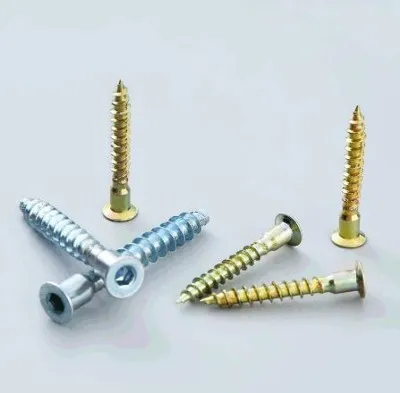
The surface treatment of electro-galvanized screws is to improve the corrosion resistance of the screws, and the color is generally yellow. The advantages of this surface treatment process are good corrosion resistance and low cost. The disadvantage is that the adhesion between the coating and the substrate is poor, making it unsuitable for long-term outdoor use.
Other color plated screws
Generally only used inside the machine, mainly including blue zinc, green zinc, colored zinc, Dacromet, etc. Blue zinc and green zinc are also commonly used outside the machine according to different needs. Blue zinc is used more in the industry, and green zinc is less used. .
Blue zinc and green zinc screws
The process is roughly the same as that of white zinc. Blue zinc is a passivated zinc oxide film containing 0.5-0.6 mg/dm2 of trivalent chromium. Green passivation is also called penta-acid passivation. A thicker grass-green film can be obtained. Passivation The liquid contains phosphate ions, and the oily grass-green film generated is a composite structural protective film composed of chromate and phosphate.
In terms of corrosion resistance, blue zinc is slightly better than white zinc, and green zinc is slightly better than blue zinc. Blue zinc is slightly blue in color and is closer to white zinc. It is widely used in industry and can be used as screws in product design later. alternative processes.

Rainbow zinc screws
In the galvanizing process, the corrosion resistance of colored zinc is relatively good. The color passivation process flow is: galvanizing - cleaning - 2%-3% nitric acid light extraction - cleaning - low chromium color passivation - cleaning - baking aging. The passivation temperature is too low, the film output speed is slow, and the excellent film is shallow and thin. The temperature is high, the film is thick and loose, and the adhesion is not strong. It is best to control it at around 25 degrees to ensure the same color within a certain period of time.
After passivation, baking aging is also performed to improve the adhesion and corrosion resistance of the paint film. Colored zinc-coated screws can withstand neutral salt spray for more than 48 hours after being touched, and can last for more than 100 hours under good control.

Dacromet coated screws
The flaky zinc-based chromium salt protective coating is also called zinc-aluminum coating. The basic process flow is degreasing-degreasing-coating-preheating-sintering-cooling. It usually takes 2-4 times from coating to cooling. If using dipping If the coated screws are to reach a certain thickness, multiple coats are required.

Its structure is to coat the metal surface with a layer of Dacromet solution (i.e. a highly dispersed aqueous solution containing zinc, aluminum scale [scale is generally 0.1-0.2X10⁻¹⁵ microns] Cr03, and special organic materials). After a certain period of heat preservation and baking at about 300°C, the hexavalent chromium in the Dacromet solution is reduced to trivalent chromium, forming an amorphous complex chromate compound (nCr03+mCr203).

The corrosion resistance is very good. Neutral salt can last for more than 300 hours. The disadvantage is that the coating is uneven. The thin part is 5-10um and the thick part is about 40um. It will affect the depth of the thread diameter of the screw, so the machine tapping screw and thread diameter It is best not to use Dacromet as a surface treatment for smaller screws.