

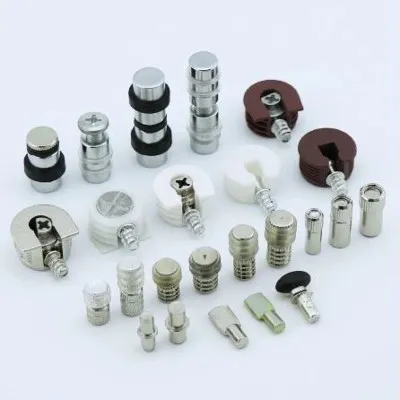

There are many kinds of surface treatment processes for screws, but the most common are oxidation, electrophoresis, electroplating and Dacromet. This article will summarize the different colors produced by each surface treatment process.
The most important factor in determining the appropriate surface treatment for a screw is the environment in which it will be used. If the screw will be exposed to harsh conditions such as high temperature or chemicals, a more durable surface treatment such as Dacromet is required.
Which screw coating is right for you?
In order to obtain the best combination of performance, you first need to determine the application requirements and then choose a surface treatment that can provide the required performance level. There are many factors to consider when making a selection, including appearance, cost, durability and ease of maintenance.
Black-plated screws
Common black screws are mainly used to fix black or other dark electrical appliances such as bottom shells or back shells. In order to reduce management, black screws are also used inside the machine. The processes for black screws include oxidation blackening, black nickel, black zinc and electrophoresis blackening.
The oxidation blackening process is the most stable and economical, but the adhesion is poor. The black nickel process has good adhesion, but poor durability. The black zinc process has better adhesion and durability than the oxidation blackening process, but the economy is poor. The electrophoretic blackening process has good stability and strong corrosion resistance.
The electrophoretic blackening process is a relatively new process, but the cost is relatively high. There are two types of surface treatment of screws: one is to form a protective film on the surface of the screw, which has good corrosion resistance and wear resistance; the other is to change the color of the screw, mainly for aesthetics.
Black-plated screws
Black oxide screws
It is divided into room temperature blackening and high temperature blackening. Taking room temperature blackening as an example, the process flow is: chemical degreasing-hot water washing-cold water washing-rust removal-acid etching-cleaning-blackening-cleaning-over-oiling or over-sealing. It is an oxide film formed at a high temperature of sodium hydroxide and sodium nitrite greater than 100 degrees.
The main component of the oxide film is ferroferric oxide (Fe3C4), the film thickness is only 0.6-1.5um, the corrosion resistance is relatively poor, and it can only last for about 1-2 hours under oil-free or closed neutral salt spray conditions, and it takes about 3-4 hours after over-oiling. This process is not used for small household appliance screws for the time being. From the appearance color, black oxide is close to black zinc and electrophoretic black, but not as bright as black zinc and electrophoretic black.
Electroplating black screws
There are two types of black electroplating: black zinc and black nickel. The process principle is basically the same, but the electroplating solution formula and post-treatment paint or passivation solution are different. Zinc is chemically active and easily oxidized and darkened in the atmosphere, producing "white rust" corrosion.
After galvanizing, chromate treatment is required to cover the zinc surface with a chemical conversion film to keep the active metal in a passivated state. The passivation film can be divided into white passivation (white zinc), light blue passivation (blue zinc), black passivation (black zinc), military green passivation (green zinc), etc.
Black zinc plated screws
The electroplating process is: degreasing - cleaning - weak acid etching - galvanizing - cleaning - passivation - cleaning - drying - gridding; the last layer of grid is mainly black oil (a kind of paint), thinner water, and rubber water mixed in a certain proportion. Its main function is to improve the uniformity and brightness of the black color on the surface of the screws and enhance the corrosion resistance of the screws. After the grid is coated, the neutral salt spray resistance can reach more than 20. If it can be oiled, the corrosion resistance can also be improved.
The neutral salt spray test of black zinc screws is 12 hours, the industry level is relatively high, and no failure phenomenon has occurred in conventional experiments. From the appearance, the color of black zinc screws is darker than that of black nickel screws, and is closer to oxidation black and electrophoresis black. The way to distinguish is to polish it on white paper several times until the zinc layer is exposed and it is bluish white.
Black zinc plated screws
Black nickel plated screws
The electroplating process is: degreasing – cleaning – weak acid activation – cleaning – copper base plating – activation – cleaning – black nickel plating – cleaning – passivation – cleaning – drying – locking bracket, black nickel layer