

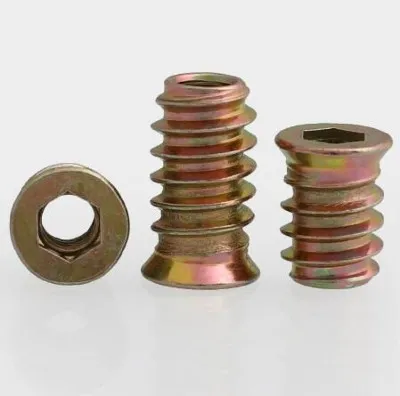
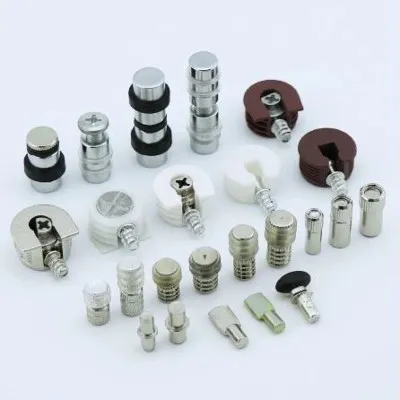

We should know more about the difference between bolts, screws and studs. Fasteners with different pointed tips are used in different industries.
Screws and bolts are well-known fasteners. They are mainly used in the manufacturing industry. They each have different functions and their shapes and appearances vary. Here, we will try to understand the difference between bolts, screws and studs.
How do you think the wheels of a car are connected to the body of the car? This is how they come to be! Screws, bolts and studs. These are the most commonly used items, but we rarely pay attention to them and benefit a lot from these seemingly harmless little devices.
Difference between bolts, screws and studs - Screws
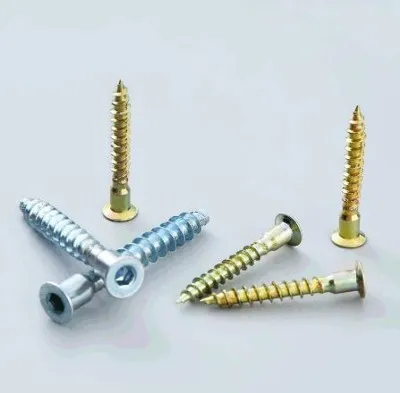
A screw can be defined as an inclined surface wrapped around a nail, which is characterized by spiral ridges. In other words, it is a long metal shaft with threads along its length. It also has a spiral, and you can use a screwdriver to turn the screw.
Screws Difference between bolts, screws and studs
Screw shape
Screws usually have a specially shaped head. The size and shape of the head determines the size of the tool used to turn or drive the screw. Commonly used tools are wrenches and screwdrivers.
The lower part of the head is a rod that can be fully or partially threaded. The threads are spiral cylindrical or conical in structure. The upper part of the ridge is called the ridge and the lower part is called the root. The distance from the top of one thread to the next is called the pitch.
Screws are tightened by turning the tool clockwise or counterclockwise and are usually used to connect materials without holes. The most common types of screws in the manufacturing industry are concrete screws, set screws, drywall screws, and mirror screws.
Screws
Screw Strength
The strength of a screw depends on the width of the threads and the distance between them. However, the greater the number of threads, the greater the number of turns required to tighten the screw. In addition, if the pitch of the threads is larger, more force must be applied to the tool when turning.
Screws are widely used in a variety of applications, from furniture to motorcycles, from air conditioners to children's remote control cars.
The difference between bolts, screws and studs - bolts
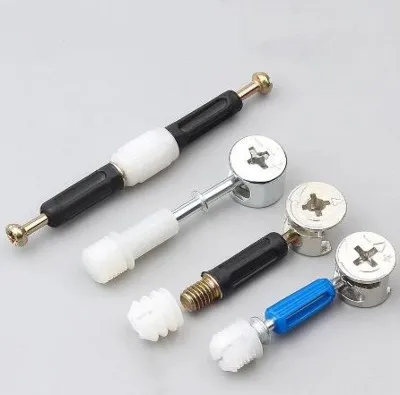
A bolt is a threaded external fastener that is inserted into a hole in an assembled component. Bolts are usually designed to be tightened or loosened with a nut.
Bolts
Generally, bolts have a uniform circular cross-section, and the threads have a helical structure with a smaller pitch than screws and studs.
Unlike bolts, bolts do not have a tapered shank. Parts fastened with bolts have higher strength than those fastened with nuts. Bolts and nuts work together on the application and are tightened at the point where torque is applied. Some commonly used bolts are carriage bolts, plow bolts, and track bolts.
Differences between bolts, screws, and studs
The reliability and durability of bolted parts are much higher than non-bolted parts. Applications of bolts include flange gaskets or fixed objects made of metal materials. Moreover, bolts are not only used in machinery but also in plumbing and electronics. Bolts are an important part of the reliability of equipment and components.
Differences between bolts, screws, and studs - studs
A stud is a metal rod or shaft with threads on both sides. Usually, the rod is longer, but the size may vary depending on the demand. A stud is a headless fastener with external threads. In other words, we can say that one end of the stud is connected to the tapered part and the other end is connected to a standard nut.
Unlike screws and bolts, studs do not have a head that needs to be tightened. When installing bolts, no external force is required to tighten them and they can be installed manually.
Studs
Studs are larger than bolts and screws
Studs are relatively larger than bolts and screws, so they can be inserted deeper into threaded holes for more applications, actually close to the untightened part of the thread. Bolts are subjected to two forces: rotational force and linear force, which can cause inaccurate torque readings. Studs do not apply rotational force, so we can get more accurate readings.
Types of Studs
There are three main types of studs: full-thread studs, threaded end studs, and double-ended studs. Depending on the application, bolts are made of various materials to meet the operating requirements. Since the stud threads are not stretched, repeatable clamping forces can be generated, resulting in a longer service life.
Studs are often used to fix cable ties. The quality of the connecting flange depends on the hole on the flange diameter, while the length of the bolt depends on the flange type and pressure rating.
Bolts prevent liquids from leaking through holes in the machine.