

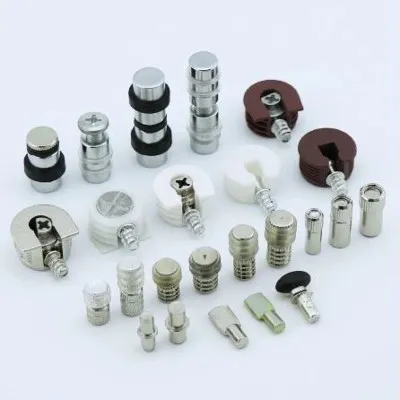

The difference between cold pressed nuts and hot melt nuts

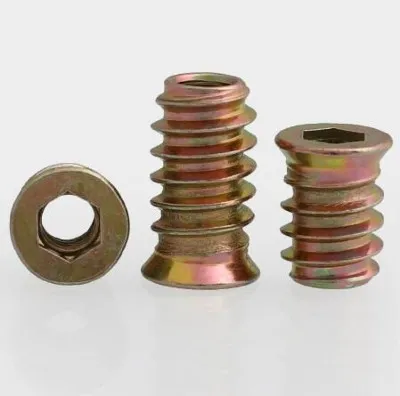
Cold-pressed nuts refer to direct pressing into plastics without heating (under room temperature). This concept is relative to hot-pressed nuts, not to nuts that are pressed into plastics "after cooling".
There is no unified national standard or industry standard for cold-pressed nuts. In the process of production or sales, we have sorted out the following standards (or styles) according to some styles commonly used by users and combined with our own manufacturing habits. These standards (or styles) can be used as a reference for users when designing products and selecting specifications.
Like other plastic insert nuts you can see on this website, they are usually heated or molded directly. Why do you need the classification of cold-pressed nuts?
We know that some thermosetting plastics (such as phenolic plastics, epoxy plastics, aminoplasts, unsaturated polyesters, alkyd plastics, etc.) use thermosetting resins as the main component, and form plastics through cross-linking and curing processes with various necessary additives. Products, this kind of material cannot be melted or softened again once it is cured. Obviously, hot melt (hot stamping, ultrasonic, etc.) nuts are no longer suitable for this kind of plastic. In this case, cold pressed nuts come in handy.
Hot melt copper nut IUTB type. The material is generally used: C3604 fast cutting brass, C3604 lead-free brass.
It is heated and pressed into the plastic preset hole, and a firm internal thread is formed after cooling. It can be quickly loaded into plastic plastic materials by hot melt or ultrasonic method, and the positive and negative phase spiral embossing pattern can provide high torque and high tensile force. Features:
Straight bore design that allows for less flesh thickness
Can be installed quickly by hot melt or ultrasonic
Round head guide design, good positioning effect; not easy to skew
Staged outer diameter design, gradual plastic injection, the base material plastic is not easy to crack
The double diagonal pattern design in the opposite direction is closely combined with the plastic to increase the torsional tension