


What are the three criteria that the most successful fastener exporter should meet
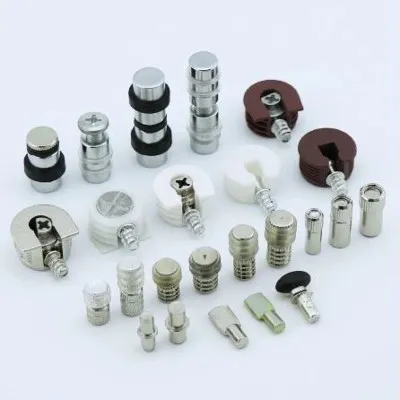
Fasteners are indispensable industrial necessities in daily life: very small fasteners used in cameras, glasses, clocks, electronic products, etc.; general fasteners such as televisions, electrical products, musical instruments, furniture, etc.; For building bridges, use large fasteners and nuts; for vehicles, aircraft, trams and cars, use large and small fasteners together. Fasteners have important tasks in industry. As long as there is industry on earth, the role of fasteners will always be important.
There are many types of fasteners, whether they are very small fasteners for eyeglasses or large fasteners for large, heavy electrical projects. The main purpose is to form a fixed body using a highly industrialized product. If the teeth are often not tightly fitted to each other during use, the screw is too tight, or the tooth pattern is poor, and the lock is not tight, it will cause the head of the fastener to break. Fasteners are "measurements", not handcrafted works of art. In mass production, their goal is to achieve high precision, stable quality and a price that consumers love. The accuracy of fasteners is usually 6g (class 2, US specification "IFI" is 2A thread), and the thick screws used in construction work are 1g class (class 3, "IFI" is 1A thread).
In the industrial fastener market, the most successful exporters meet these three conditions: never export substandard products; identify and control non-production costs; manage production on the basis of products that consumers want to buy, not those that are easy produced products. "
If Chinese companies want to export industrial fasteners to the United States, it is important to understand the differences between China and the United States. The United States is a consumption-oriented society, and many countries in the world are production-oriented societies in my opinion. In a producer-centered society, it is usually the producers who make the rules for buying and selling. In a producer-oriented society, consumers or customers buy products passively because there are more consumers than producers. Recognizing that the US is a consumer-oriented society, Chinese manufacturers will have the greatest export opportunities. The most successful exporters in the industrial fastener market will be those who: 1. Never export substandard products; 2. Identify and control non-production costs; 3. Produce what consumers want to buy and not produce products that are easy to produce . In a consumption-oriented society, consumers dictate the rules of buying and selling. Consumers buy products based on other perceived values, not just product price. Consumers expect products to meet or exceed quality standards, and returns are considered unreasonable and unacceptable. Consumers have little to no queues, and some consumers actually prefer pricier products because they feel they are of better quality, if not better quality.
The vast majority of mechanical parts are made of carbon and alloy structural steels. When turning these materials, they often form banded chips. In order to remove chips from the blank, the insert needs to withstand huge loads. The removed chips slide quickly off the rake face of the insert. In the process of relative movement with the blade, a high friction surface is generated and a high temperature is formed. Therefore, the blade material must not only be wear-resistant, but also be able to withstand high temperatures and maintain hardness at high temperatures. Therefore, P-type cemented carbide with a large proportion of TiC+TaC should be selected for cutting such materials. Nowadays, in order to improve cutting efficiency; cutting speed; feed rate is getting higher and higher, P-type cemented carbide blades are not competent. In the middle of the last century, people developed a layer of high hardness coating on the P-type hard blade, called coating. The thickness of the coating is only about 0.2% of the thickness of the blade, which can greatly improve the life of the blade and can adapt to higher cutting speeds. In the past few decades, the coating technology has also been continuously developed, such as from single layer to multi-layer or even nano-multi-layer; the thickness has also increased from a few microns to more than ten microns, or even more. It is becoming more and more advanced; the cemented carbide as the base material has also developed from a single isotropy to a structure with tilting properties that meet processing requirements. The thickness of the coating is only about 0.2% of the thickness of the blade, which can greatly improve the life of the blade and can adapt to higher cutting speeds. In the past few decades, the coating technology has also been continuously developed, such as from single layer to multi-layer or even nano-multi-layer; the thickness has also increased from a few microns to more than ten microns, or even more. It is becoming more and more advanced; the cemented carbide as the base material has also developed from a single isotropy to a structure with tilting properties that meet processing requirements. The thickness of the coating is only about 0.2% of the thickness of the blade, which can greatly improve the life of the blade and can adapt to higher cutting speeds. In the past few decades, the coating technology has also been continuously developed, such as from single layer to multi-layer or even nano-multi-layer; the thickness has also increased from a few microns to more than ten microns, or even more. It is becoming more and more advanced; the cemented carbide as the base material has also developed from a single isotropy to a structure with tilting properties that meet processing requirements. For example, from single layer to multi-layer or even nano-multi-layer; the thickness also increases from a few microns to more than ten microns, or even more. It is becoming more and more advanced; the cemented carbide as the base material has also developed from a single isotropy to a structure with tilting properties that meet processing requirements. For example, from single layer to multi-layer or even nano-multi-layer; the thickness also increases from a few microns to more than ten microns, or even more. It is becoming more and more advanced; the cemented carbide as the base material has also developed from a single isotropy to a structure with tilting properties that meet processing requirements.
For sintered tool materials, bonding and sintering wear is possible, but mainly chip bonding that is firmly bonded to the tool surface. Sintered material and built-up edge are forced to separate from the tool surface after subsequent machining impacts. During this process, the parts of the tool are also taken away at the same time, causing adhesion, fusion defects and damage, so the adhesion and fusion of chips should be avoided as much as possible during on-site processing. Of course they also affect the quality of the machined surface.