

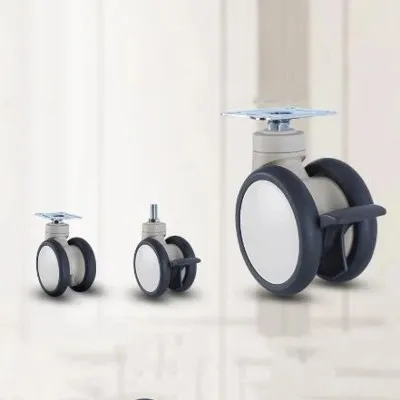
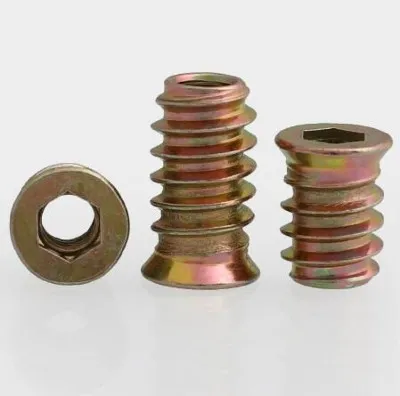
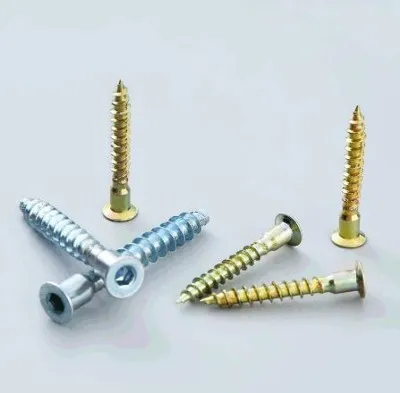
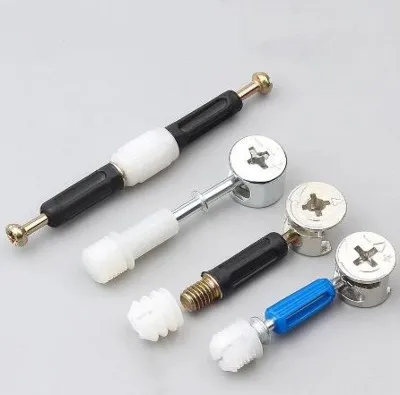
Material selection is a critical step in determining caster characteristics. Casters made of different materials, such as metal, rubber, and polyurethane, have unique properties that need to be balanced based on factors such as environmental conditions, load-bearing capacity, and wear resistance. For example, metal casters may be suitable for heavy-duty scenarios, while rubber casters excel at providing excellent shock absorption for applications that require vibration damping.
Design and prototyping are critical steps in ensuring the functionality and performance of industrial casters. During the design phase, engineers consider factors such as size, shape and structure to meet specific application requirements. The purpose of prototyping is to verify the accuracy and feasibility of the design and test actual samples to ensure stable operation under various conditions.
Forming technology is a core part of industrial caster manufacturing. Various molding technologies, including injection molding and casting, directly affect the structure and performance of casters. Injection molding is used to create complex wheel structures by pouring molten material into a mold, while casting is suitable for producing strong and durable casters by pouring molten metal into a mold.
●Machining: After being molded or cast, the wheel may go through a machining process to obtain its final dimensions and smooth surface. Metal wheels, in particular, can be machined to precise specifications.
Hub and Bearing Mounting: The hub is the center part of the wheel that connects to the axle. It is usually made of metal. Bearings are installed in the wheel hub to allow the wheel to rotate smoothly.
●Assembly: Assembling various components, including wheels, hubs and bearings, together. Fasteners such as bolts or rivets can be used to secure components.
●Finishing: Casters may receive additional finishing processes, such as coating or painting, to enhance their appearance and provide protection against corrosion.


Quality control and innovation of casters
The manufacturing of industrial casters goes beyond materials and technology, quality control and innovation are key factors in ensuring superior performance.
Quality control standards play a central role in our company's manufacturing process. From material procurement to final product inspection, every manufacturing step undergoes strict quality control. Advanced testing equipment and technology are used to ensure that each caster meets the company's high quality standards, ensuring reliability and durability.
Innovation is what drives our company to stand out in the industry. The company continuously invests in research and technological innovation to adapt to changing market needs. Especially in the field of heavy industrial casters, gravity casters lead the development of the industry and maintain competitive advantages by introducing new materials and new processes.
The team's collaborative efforts in quality control and innovation are noteworthy. Every team member is treated as a partner, and the company is committed to nurturing and developing their skills, actively involving them in the innovation process. This partnership culture not only improves work efficiency but also creates strong bonds based on trust among team members.
Things to consider when choosing casters
Factors to consider when choosing casters include:
How maneuverable should the equipment be?
If the equipment only moves in a straight line, such as a large piece of equipment that is hauled out for cleaning and then returned to the same location, fixed casters may be sufficient. On the other hand, if more maneuverability is required, swivel casters may be a better choice. If the device is to be moved in a straight line, also consider whether a rotation lock is required. The ability to move something is a reason to have casters on it, but you also need to know how much freedom of movement there is.
What is the best way to install casters?
While this may not seem like a significant issue, it may limit which spellcaster is chosen for the quest. Many applications require casters mounted on casters, although this limits the caster's load-bearing capacity. Heavy duty casters will use plate mounting to secure the caster and spread the load over a larger mounting area. Knowing your mounting preferences can help narrow down your choices when choosing from a large selection of casters.
What is the purpose of the spell caster?
What kind of machinery will the casters be mounted on? This may seem like a simple question, but it's an important one. This question will help evaluate whether light, medium or heavy duty casters are needed based on the total weight exerted on the casters. This issue needs to consider the environment in which the casters are used. Will noise cancellation be a big thing?