


Why Loose Fasteners Should Not Be Ignored
A loose screw or bolt may look like a small problem, but in real products it can quickly become a bigger issue.
In furniture manufacturing, a loose connector can make a cabinet shake or a table leg feel unstable. In a hospital trolley, loose caster bolts can affect movement and safety. In industrial carts or equipment frames, loose threaded fasteners may cause noise, vibration, structural wear, or even equipment failure.
This is why fastener loosening detection is important for furniture factories, medical equipment manufacturers, hardware suppliers, and maintenance teams. The goal is not only to find a loose screw after something goes wrong, but to notice early signs before the product loses stability.
Threaded fasteners are used everywhere: screws, bolts, nuts, insert nuts, connector bolts, caster mounting bolts, shelf support screws, and custom fasteners. When these parts are selected or installed incorrectly, loosening becomes much more likely.
What Usually Causes Threaded Fasteners to Loosen?
Most loose fastener problems come from movement, vibration, poor installation, or a mismatch between the fastener and the material.
For example, a caster wheel mounted under a medical cart moves across floors every day. Each turn, bump, and stop creates small vibration at the mounting plate. If the bolts are too short, the tightening torque is not enough, or the bracket is not well matched to the base, the connection may loosen over time.
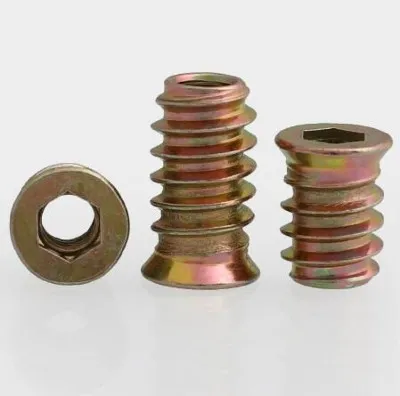
For wood furniture, the problem can be different. MDF, particle board, plywood, and solid wood all hold screws differently. If the pre-drilled hole is too large, the screw may not grip well. If a table leg is removed and reinstalled many times, ordinary wood screws may damage the hole. In that case, insert nuts or connector bolts are often a better solution.
Common causes include:
- Repeated vibration during use
- Incorrect tightening torque
- Short thread engagement
- Soft or damaged base material
- Poor hole size
- Missing washers or unsuitable nuts
- Repeated assembly and disassembly
- Impact during transportation
- Low-quality surface treatment or corrosion
- Poor matching between fastener and application
In short, a fastener does not loosen for no reason. There is usually a design, material, assembly, or maintenance issue behind it.
1. Visual Inspection: The First and Easiest Method
The simplest way to check loose threaded fasteners is still visual inspection.
Look closely at the connection point. Are there gaps between the bracket and the surface? Has the screw head lifted slightly? Is the washer no longer sitting flat? Are there scratches, rust marks, or movement marks around the hole?
These small signs often appear before the whole structure becomes obviously loose.
Example: Caster Wheels on a Hospital Trolley
A hospital medicine trolley usually has four caster wheels mounted under the base. During daily use, the trolley is pushed, turned, stopped, and locked many times.
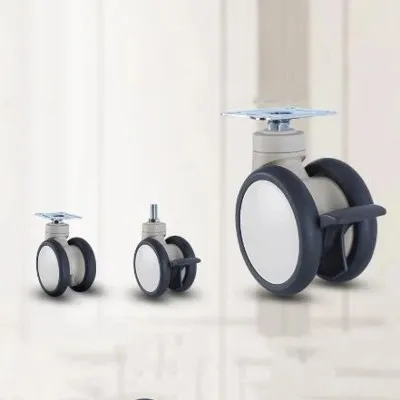
When checking the caster area, look at the mounting plate. It should sit flat against the cart base. If one corner of the plate is lifted, or if one bolt head does not sit tightly against the plate, the caster may already be loosening.
This kind of problem is easy to miss because the trolley may still move normally at first. But after weeks or months of use, the wheel may shake, make noise, or wear the mounting holes.
2. Manual Shake Test: Simple but Useful
For many furniture and equipment products, a quick shake test can reveal problems that are not obvious by sight.
Hold the part and apply light pressure. A table leg should not move. A cart handle should not click. A caster bracket should not shift separately from the base. A cabinet panel should not make a hollow or rattling sound when touched.
This method is useful for:
- Table legs
- Bed frames
- Cabinet panels
- Shelf supports
- Medical trolley handles
- Caster wheel brackets
- Laboratory carts
- Industrial equipment stands
Example: Flat-Pack Furniture After Reassembly
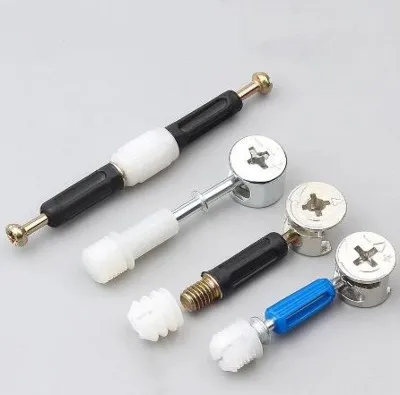
Flat-pack furniture may be assembled, moved, disassembled, and assembled again. After repeated use, cam locks, connector bolts, screws, and insert nuts may lose holding strength if the hardware is not suitable.
A simple shake test can quickly show whether the structure is still tight. If the cabinet sways from side to side, the problem may come from loose connectors or enlarged screw holes.
For this type of furniture, stronger connector systems and properly selected insert nuts can reduce repeat-assembly problems.
3. Torque Checking for More Critical Connections
For important fastener points, visual inspection is not always enough. A screw may look normal but may no longer have enough clamping force.
Torque checking uses a torque wrench to confirm whether bolts are still tightened to the required level. This method is more suitable for equipment, industrial carts, medical devices, and heavy-duty caster installations.
Example: Pharmacy Automation Cabinet
A pharmacy automation cabinet is usually larger and heavier than a normal storage cabinet. It may have motors, drawers, internal storage systems, electronic modules, and a heavy cabinet body.
The caster wheels or leveling feet under this type of cabinet must support the whole structure. If the bolts are loose, the equipment may become unstable during movement or maintenance.
During production or maintenance, workers can use a torque wrench to check the caster mounting bolts. If a bolt turns easily before reaching the required torque, the connection should be inspected and tightened again.
For heavy equipment, this is much more reliable than only checking by hand.
4. Paint Marking: A Low-Cost Way to See Rotation
Paint marking is a simple method used in many equipment and vehicle applications.
After the fastener is tightened, draw a line across the bolt head and the nearby surface. If the line becomes misaligned later, the bolt has rotated.
This method is not complicated, but it works well for fasteners that need regular inspection.
Example: Industrial Cart with Heavy-Duty Casters
An industrial trolley may use large caster wheels with several bolts on each mounting plate. After installation, the maintenance team can mark each bolt head and the plate.
During later inspection, they only need to check whether the marks are still aligned. If one mark has moved, that bolt may have loosened because of vibration or load impact.
For warehouses, workshops, factories, and medical equipment rooms, this method is cheap and easy to train.
5. Listening for Abnormal Sound
Loose fasteners often create sound before they create visible failure.
A panel may rattle. A caster may click. A bracket may make a slight knocking sound. A cabinet may sound hollow when tapped in one area.
This kind of sound check is not as precise as torque checking, but experienced workers can often notice problems quickly.
Example: Medical Equipment Panel Assembly
Some medical equipment uses metal or composite panels fixed with screws, brackets, and internal connectors. If one group of fasteners becomes loose, the panel may vibrate or produce a different sound when tapped.
A technician can compare the sound from several areas of the same panel. If one area sounds loose or hollow, the panel should be opened and the fasteners checked.
This is especially useful when the screws are hidden or difficult to see from the outside.
6. Vibration Monitoring for Equipment with Moving Parts
For general furniture, vibration monitoring is usually not necessary. But for automated equipment or machines with moving parts, vibration changes can be a useful warning sign.
When a threaded fastener loosens, the structure may vibrate differently. The equipment may become noisier, less stable, or less accurate during operation.
Example: Automated Medical Storage System
A medical storage or pharmacy automation system may include moving rails, drawers, motors, and cabinet structures. If a key bracket or internal fastener loosens, the machine may start to produce abnormal vibration.
Maintenance teams can monitor vibration patterns and check the structure when abnormal movement appears. This helps find problems before they develop into major equipment failure.
7. Camera or Vision Inspection in Production
For factories with larger production volume, camera inspection can help improve consistency.
Vision inspection can check whether screws are missing, tilted, not fully seated, or installed in the wrong position. It can also help detect whether fastener heads are aligned correctly.
Example: Cabinet or Cart Production Line
A factory producing medical carts or cabinet hardware may use visual inspection during final assembly. Workers or cameras can check whether all caster bolts, handle screws, shelf support holes, and panel connectors are correctly installed.
This is especially useful when producing large quantities of similar products, because manual inspection alone can miss small repeated errors.
8. Regular Maintenance Is Still the Most Practical Solution
For most furniture, carts, cabinets, and equipment, regular maintenance is the most practical way to manage fastener loosening.
A simple maintenance routine should include:
Check caster mounting bolts
- Inspect handles and brackets
- Look for gaps around screw heads
- Test whether panels or legs shake
- Check shelf supports and connector bolts
- Re-tighten important fasteners if needed
- Replace damaged screws, nuts, washers, or inserts
- Inspect corrosion or surface wear
Example: Hospital Medicine Trolley Maintenance
A hospital trolley is moved many times every day. It may carry medicine, tools, documents, or small devices.
During maintenance, the caster wheels should be checked first because they take the most movement and vibration. The handle screws, drawer slides, and shelf supports should also be inspected.
If the trolley starts making noise or feels unstable when pushed, the fasteners should be checked immediately instead of waiting for a complete failure.
How to Reduce Fastener Loosening Before It Happens
Detecting loose fasteners is important, but good design and correct hardware selection are even more important.
Manufacturers can reduce loosening by choosing fasteners based on the real application, not only by price.
For furniture, the key questions are:
- Is the material solid wood, MDF, plywood, or particle board?
- Will the product be assembled only once or many times?
- Does the joint carry weight?
- Does the furniture need to be shipped flat?
- Should insert nuts or connector bolts be used instead of direct wood screws?
- For medical equipment and carts, the questions are different:
- How much load will the caster carry?
- Will the cart move every day?
- Does the caster need a brake?
- Is the equipment used in a clean or humid environment?
- Are the bolts easy to inspect and maintain?
- Is a locking nut, washer, or stronger bracket needed?
For industrial trolleys, load capacity, vibration, impact, and floor condition should also be considered.
The best fastener solution is always connected to the actual product structure.
Choosing Better Hardware for Long-Term Stability
Different products need different hardware.
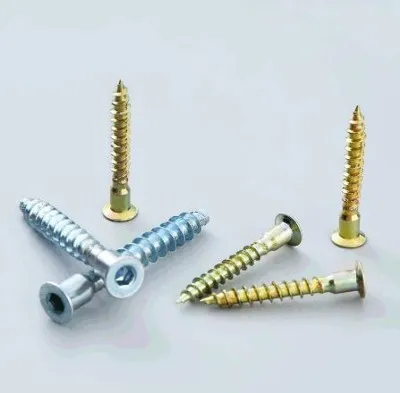
For wooden tables and bed frames, insert nuts and connector bolts can improve repeated assembly strength. For cabinets and wardrobes, cam lock connectors, shelf supports, screws, and dowel systems should be matched with the board material. For medical carts, caster mounting bolts and locking casters need to handle daily movement. For industrial carts, stronger fasteners and reinforced brackets are often necessary.
A small hardware upgrade can sometimes reduce many later problems.
For example, using a stronger caster bracket, a better surface finish, or a longer thread engagement may improve the service life of the whole product. In furniture manufacturing, using insert nuts instead of direct wood screws can make the product more suitable for export, flat-pack shipping, and repeated assembly.
ZIN Hardware Solutions for Threaded Fasteners and Custom Hardware
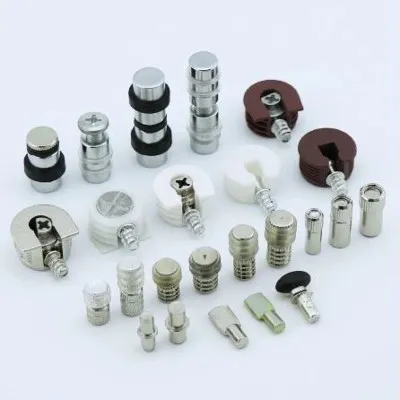
ZIN Hardware supplies furniture fasteners, screws, nuts, insert nuts, furniture connectors, shelf supports, caster wheels, and custom metal hardware for furniture, medical equipment, storage cabinets, laboratory carts, industrial trolleys, and related applications.
We support standard and customized hardware solutions based on:
- Size
- Material
- Thread type
- Surface finish
- Load requirement
- Bracket design
- Drawing or sample
- Packaging method
- Bulk order requirements
For customers developing new furniture or equipment, choosing the correct fastener at the design stage can help reduce loosening, improve assembly quality, and lower future maintenance problems.
FAQ
What are the most common signs of loose threaded fasteners?
Common signs include shaking parts, rattling noise, visible gaps, rotated screw heads, loose brackets, enlarged holes, or unstable movement.
Why do screws and bolts loosen over time?
They usually loosen because of vibration, repeated loading, impact, poor tightening, soft base materials, wrong hole size, or unsuitable fastener selection.
How can I check if caster wheel bolts are loose?
Check whether the mounting plate sits flat against the base. Then test the wheel by hand. If the wheel bracket moves separately from the cart body, the bolts should be inspected and tightened.
Are insert nuts better for wood furniture?
For furniture that needs repeated assembly, insert nuts are often better than direct wood screws because they provide a stronger metal thread inside the wood.
What fasteners are suitable for medical carts?
Medical carts may need caster mounting bolts, locking casters, screws, nuts, washers, brackets, shelf supports, and custom hardware depending on the structure and load requirement.
Can ZIN Hardware provide custom fasteners?
Yes. ZIN Hardware can provide standard and custom fasteners, nuts, screws, furniture connectors, caster wheels, shelf supports, and metal hardware parts based on customer drawings, samples, sizes, materials, finishes, and quantities.
Conclusion
Loose threaded fasteners are common, but they should not be ignored. A loose screw, bolt, nut, or connector can affect the safety, stability, and service life of furniture, medical equipment, carts, cabinets, and industrial hardware.
Practical detection methods include visual inspection, shake testing, torque checking, paint marking, sound checking, vibration monitoring, and production-line visual inspection. For most manufacturers, the best approach is to combine regular inspection with better fastener selection from the beginning.
If you are looking for furniture fasteners, caster wheels, insert nuts, screws, nuts, connectors, shelf supports, or custom hardware solutions, ZIN Hardware can help you choose suitable products based on your application, size, material, finish, drawing, sample, and order quantity.